


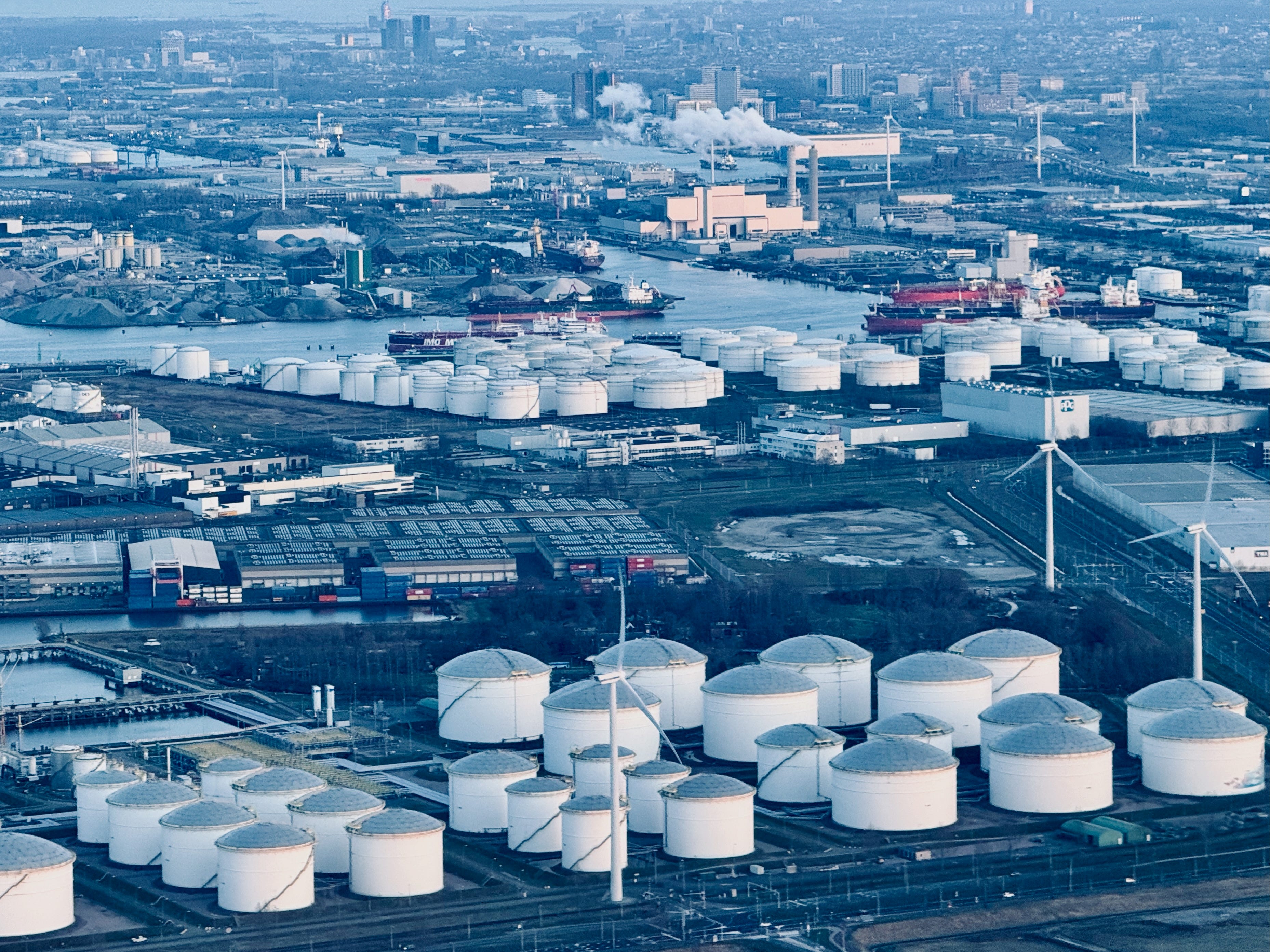
The standard way to discuss an energy crisis is in terms of barrels.
How many million barrels a day transit the Strait of Hormuz? How much of global LNG supply is at risk? What does OPEC spare capacity look like? How quickly can shale producers ramp up?
These are legitimate questions. But in a serious disruption, they are not the first questions that matter. The first question is simpler and harder: can the molecules actually move?
Energy security is widely discussed as if it were primarily a question of resource abundance: how much exists, where it is, and who controls it. The Hormuz crisis has exposed something more fundamental. Resilience depends not on the scale of the resource, how much is produced or where it sits, but on whether it can be extracted, processed, transported and delivered when normal routes fail. The chokepoints are rarely where people expect them. There are more of them than most energy security planning ever identifies.
This distinction matters enormously for how energy companies invest, and how investors, banks, insurers and policymakers assess risk. It also reframes what responsible energy security planning requires.
FOUR CASES WORTH UNDERSTANDING
Route optionality: Yanbu and the limits of the bypass
Saudi Arabia's East-West pipeline (Petroline) runs roughly 1,200 kilometres from the Eastern Province to Yanbu on the Red Sea coast, bypassing the Gulf entirely. Its normal operating capacity is around five million barrels a day. Since the current crisis deepened, Saudi Arabia has converted companion natural gas liquids pipelines to carry crude. This has pushed throughput toward seven million barrels a day. This is a significant and rapid response.
But the pipeline is not the binding constraint. Yanbu's export terminals are. Nominal loading capacity at the port runs to around 4.5 million barrels a day; tested operational capacity is closer to four million. Under prolonged disruption, analysts estimate effective throughput approaching four million barrels a day. A substantial achievement, though still significantly below what the pipeline can now deliver.
The lesson is not that Yanbu doesn't matter. It matters enormously, and Saudi Arabia has moved fast to maximise it. The lesson is that the terminal, not the pipe, is where the system is actually constrained. The bypass exists; the export capacity to fully match it does not.
Drilled but uncompleted: the US shale question
US shale is frequently cited as the global swing producer that can offset Middle East supply disruption. The argument rests partly on inventory of drilled-but-uncompleted wells (DUCs) that can be brought online faster than new drilling. This speed advantage over conventional production is real.
But the infrastructure constraints apply here too:. Export capacity from the Permian and other producing basins has its limits. Similarly, throughput across the US LNG export terminals which are spread across the Gulf of Mexico coast and the Atlantic seaboard is already constrained. Global LNG shipping availability further determines how quickly additional US volumes can reach international markets.
In a fast-moving disruption, the shale ramp-up is a medium-term answer to a short-term problem.
Transit politics: Iraq and the limits of the corridor
The third case is less about physical infrastructure and more about political geography. Iraq exports the bulk of its oil through the Basra terminals in the northern Arabian Gulf . This is directly exposed to any Hormuz disruption with no meaningful bypass. The Kirkuk-Ceyhan pipeline offers an alternative route to the Turkish Mediterranean port of Ceyhan, avoiding the Gulf entirely. It has been effectively shut since March 2023, not due to physical damage, but due to a legal dispute between Baghdad, Ankara and the Kurdistan Regional Government over revenue rights and transit authority. International arbitration ruling found Turkey in breach of its Host Government Agreement. Turkey closed the pipeline in response. The infrastructure exists. The oil exists. The corridor exists. What does not exist is the political agreement to use it.
Access as infrastructure: the permission corridor
There is a fourth case that does not quite fit the same category as the others. The Petroline has physical capacity constraints. The DUC inventory has infrastructure bottlenecks. The Kirkuk-Ceyhan pipeline is closed by legal dispute. But the Hormuz corridor that has emerged since February is different. It is functioning infrastructure selectively accessible on terms set by Iran. It is not constrained by capacity, capital expenditure or contract dispute, but by political relationship.
Ships belonging to countries Iran designates as adversarial are excluded. Others can transit. In some cases, ships are paying corridor fees of up to $2 million per vessel. China's vessels were among the first to use this arrangement. Japan has since been granted access. The architecture is explicit: the Strait of Hormuz remains physically operational, but access has been repriced. Is has changed from a route open to all nations at the price of passage, to a conditional resource allocated by a regional power on geopolitical criteria. Tolling transit of waterways is not unusual. Egypt tolls the Suez and Panama has its canal too. But those waterways pass through those countries.
This is not merely a crisis measure. It is a demonstration that physical infrastructure security and the right to use it are separate problems. Access can be weaponised even when the infrastructure remains intact. The Russia gas crisis of 2022 established that price alone does not guarantee supply. The Hormuz corridor extends this further. Access is not simply cut off, but conditionally priced and politically filtered. That is a more difficult model to deal with. Some buyers can still transit, which divides the political response. This creates incentives for accommodation to avoid disruption now rather than diversification to avoid future exposure. Sovereign risk modelling for any asset exposed to this geography needs to be recalibrated accordingly.
BEYOND THE OIL SYSTEM
The infrastructure constraint runs through the entire energy system, and beyond it. The contract structure governing LNG trade compounds the geographic exposure. European buyers who secured US supply under FOB (free on board) contracts retain the right to redirect cargoes to the highest-priced available market. This is a flexibility that most Asian buyers lack. The majority of long-term Asian LNG contracts are oil-price-linked. Those pricing mechanisms create approximately a three-month lag between a post-Hormuz oil price rise and its full impact on contracted supply costs. Asian buyers now face both immediate physical tightening and a delayed but unavoidable repricing of LNG volumes. The asymmetry is structural, not temporary. It shapes both who bears the near-term cost and who has the flexibility to respond.
And the dependency extends beyond energy itself. One third of global seaborne fertiliser trade transits Hormuz. Since February, urea prices have risen from $400–490 to approximately $700 per metric tonne. This is a rise of between forty and seventy-five percent depending on grade and origin. China has restricted fertiliser exports to protect its own domestic agricultural market, removing a supply buffer that South Asian buyers had been relying on. Bangladesh, India, Pakistan and Sri Lanka face the steepest exposure. This disruption will affect food production timelines for the next agricultural cycle and food prices at retail level months after any resolution. The molecules that cannot move is not only hydrocarbons.
Helium keeps MRI scanners running and semiconductor fabs operational. It also transits Hormuz in significant volumes. Specialist chemicals and plastics that semiconductors cannot be manufactured without are similarly exposed. A disruption to molecular supply chains does not stop at the energy sector. It reaches into healthcare, food security and the digital economy — across much of the industrial base that advanced economies assume is insulated from energy market volatility.
The same concentration logic applies to the energy transition, though through different geography entirely. The hardware required, take solar panels, batteries, wind turbine components, for example, are built from critical minerals whose extraction and processing are as geographically concentrated as any oil export route. A lithium battery in a Chinese factory is not a lithium battery in a European energy storage system. The lithium, the processing chemistry, the shipping, each is a point of failure.
THE PRACTICAL TEST
When I was running operations in the Western Desert of Egypt, I was responsible for production of around 100,000 barrels of oil equivalent a day and the safety of 1,500 staff and contractors. Infrastructure was never abstract. That applied not only to the production facilities themselves, but to every link in the supporting chain. This included food trucks reaching remote desert locations, staff buses running reliably, the logistics that kept them safe and operational in an unforgiving environment. What that experience taught me was to plan not for what should work, but for what might not. Some plans hold under pressure. Others only hold on paper. Assume the worst, hope for the best is one way of thinking about it. Hope is not a method, is another.
At ADNOC, the stakes were both national and global. ADNOC is one of the world's largest national oil companies (NOC) and it shapes the country's energy future. When I was there, we had COP28 to be hosted in Dubai on the horizon, and the world watching how a major Gulf producer would navigate the energy transition. My role was to integrate energy supply reliability and energy transition planning not as competing priorities, but as a single challenge. This is responsible energy security.
The useful test for any energy system is to trace your supply chain from source to final use, and ask at every link: how many genuine alternatives exist. Not theoretical ones, but how many alternatives that can handle the volume, within the timeframe, at affordable cost? And what is your plan when even those are unavailable?
Most energy systems, when tested this way, look more fragile than the production figures suggest. The honest answer is that this question is not fully addressed.
That is what responsible energy security requires us to confront. Not just whether the barrels are there, but whether they can move when the system comes under stress. The Hormuz crisis has forced that question into the open.
Infrastructure cannot be conjured in a crisis. The time to ask whether your molecules can move, and what your plan is when they cannot, is before that day arrives. Returning frequently to ask ourselves those questions as the world changes around us is what responsible energy security actually requires.
Responsible Energy Briefing is published monthly. If you found this useful, consider sharing it with a colleague.
John MacArthur FREng FEI is Director of Highland Sustainability Limited, Visiting Professor at Imperial College London, and Honorary Chair of the London College of Energy Economics. He was previously Group Climate Change Officer at ADNOC and held senior leadership roles at Shell across carbon strategy, technology and operations.